How We Protect Your Kitchen During a Respray
One of the most common questions I get asked before a kitchen respray is: what happens to the rest of my kitchen while you’re spraying? It’s a fair question. Spray painting in an enclosed space needs careful management. Done properly, it leaves your kitchen cleaner than we found it. Done carelessly, it creates more work than it saves. Here’s exactly how we handle it.
Masking Takes More Time Than the Spraying Itself
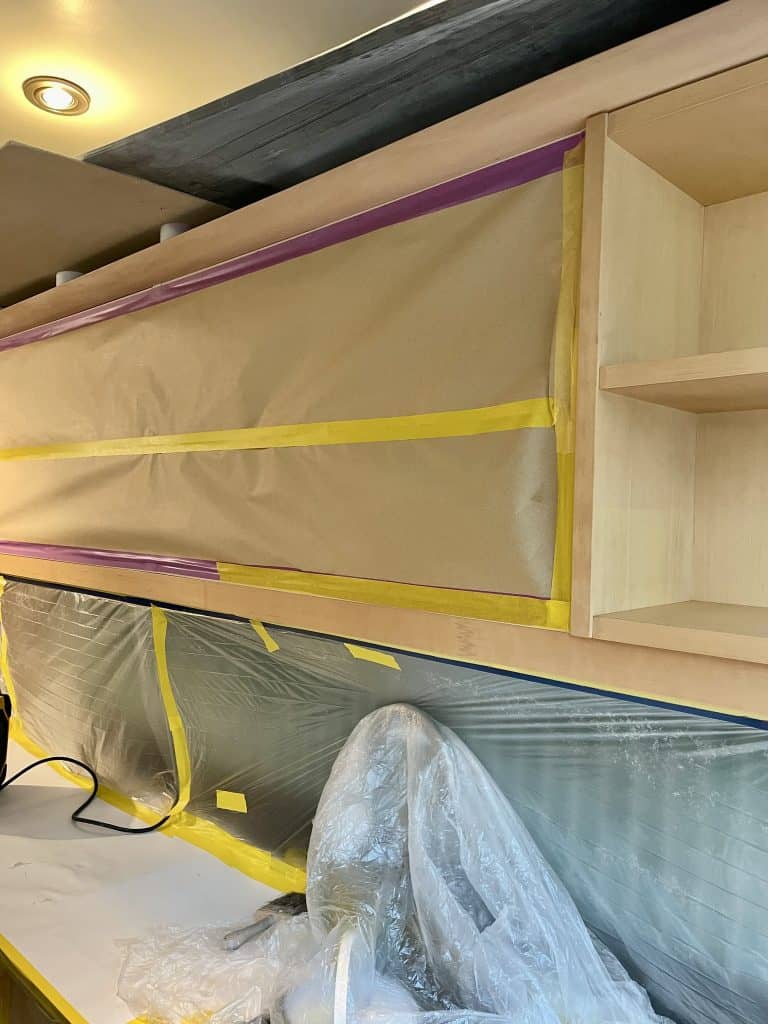
That’s not an exaggeration. Preparation — including masking — is the longest part of the whole process. We mask floors, walls, worktops, appliances, and ceiling sections before a drop of paint goes anywhere near your cabinets. Every edge gets taped cleanly. Every gap gets covered.
We’ve been refining this process since 2004. We’ve tried most products on the market and we’re particular about the tapes and masking materials we use — because the quality of the mask directly affects the sharpness of the finished edge. A clean mask means a clean line. There’s no shortcut worth taking.
What Gets Masked and Why
Floors and Worktops
These get full coverage. Even with controlled spray technique, overspray is a reality. We lay protective sheeting across the floor and cover worktops completely before any spraying begins.
Walls and Ceiling
We mask the sections directly adjacent to the cabinets. This protects your existing décor and means the spray finish stays exactly where it’s supposed to.
Appliances and Fittings
Anything that stays in place — integrated appliances, taps, handles if we’re working around them — gets covered. We treat your kitchen with the same care we’d want someone to show ours.
You Don’t Need to Empty Your Cupboards
We remove the cabinet doors and take them to our off-site workshop for spraying. That means the doors get a true factory finish — controlled environment, no dust, no draughts. And it means you don’t have to pack up your entire kitchen. The carcasses stay in place. You keep access to your plates and your morning coffee throughout the process.
Low-VOC Paints — Better for Your Home
We use water-based, low-VOC coatings — the same professional-grade finishes used in furniture and joinery manufacturing. Tikkurila is one of the ranges we work with regularly. Lower VOC means less odour and better air quality in your home during the process. It also means the finish cures properly and holds up over time — which is why we can back it with a 10-year guarantee.
The Result: A Clean Kitchen and a Factory Finish
When we leave, we take every bit of masking material with us. No tape residue, no dust sheets left behind. What you’re left with is a kitchen that looks like it came straight from a showroom — no brush marks, no roller texture, just a smooth, hard-wearing finish on every surface we’ve sprayed.
That finish is only possible because of what happens before the spraying starts. The masking, the prep, the process — it’s all connected. This is what separates specialist spray finishing from a quick coat of paint.
If you’d like to know more about how we work, or you want to see examples from previous kitchen resprays across Surrey and South London, get in touch. Call us on 0203 355 1495 or use the contact form on the site. We’re happy to talk through your project before you commit to anything.
Frequently Asked Questions
Do I need to clear out my kitchen before you start respraying?
No. We remove the cabinet doors and spray them off-site in our workshop, so the carcasses stay in place throughout. You keep full access to your kitchen during the process. We handle all the masking and protection of the surrounding areas ourselves.
Will spray paint get on my walls, floor, or worktops?
Not if the job is done properly — and we make sure it is. We mask floors, worktops, walls, and ceiling sections before any spraying begins. Masking is the most time-consuming part of the process precisely because it matters. A properly masked kitchen means crisp edges and zero overspray on surfaces that aren’t being painted.
How long does it take to mask a kitchen before respraying?
Masking typically takes longer than the spraying itself. For an average kitchen, it can take the better part of a day to prepare everything correctly. We don’t rush this stage — the quality of the final finish depends directly on the quality of the preparation. That’s been our approach since we started in 2004, and it’s why we can offer a 10-year guarantee on our work.